
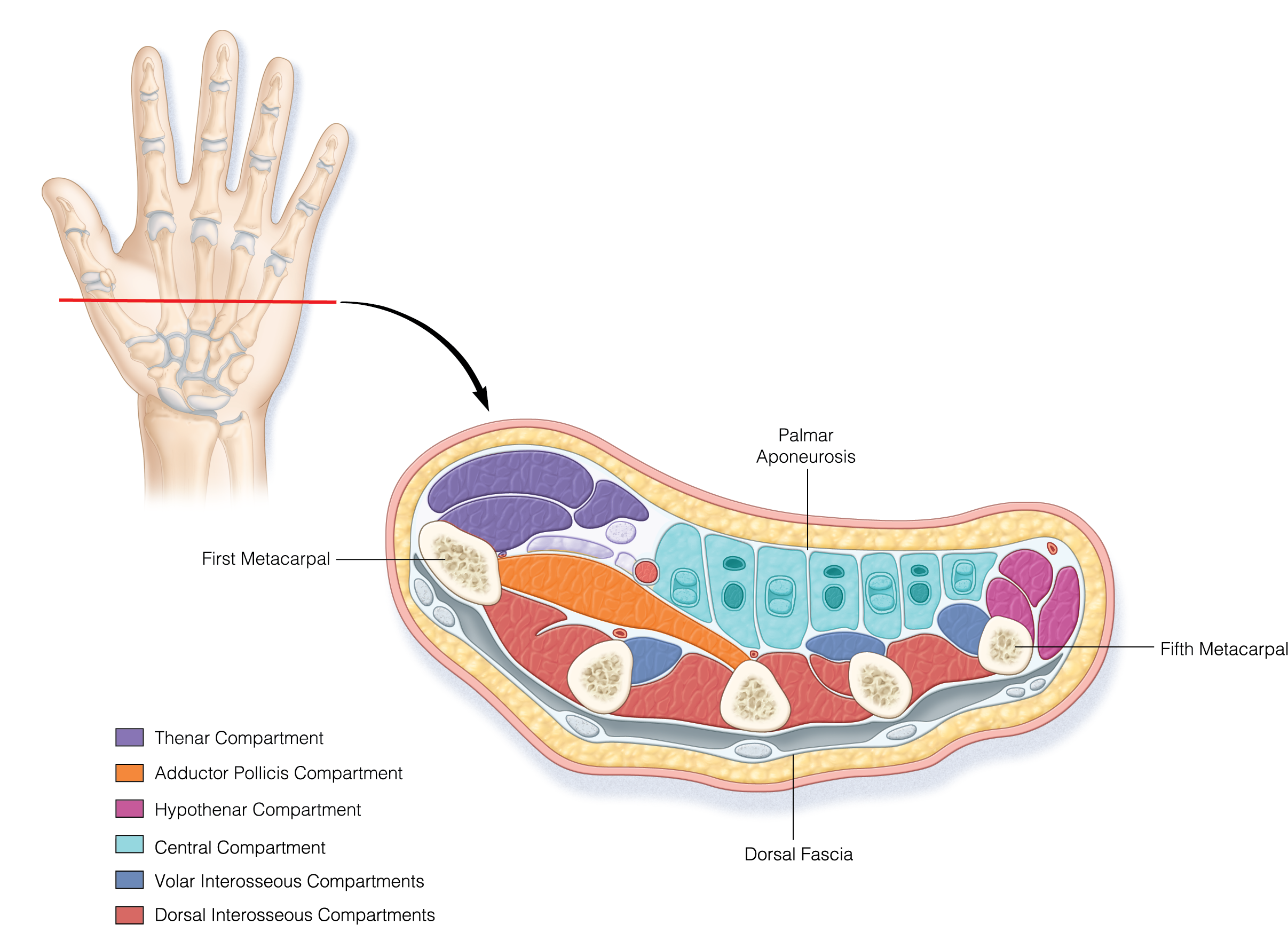
Upper Extremity Compartment Syndrome
- Acute compartment syndrome (ACS) of the upper extremity is commonly associated with trauma; however, over 20% of cases occur in the absence of a fracture.
- A high index of suspicion is required for ACS, particularly in the obtunded or insensate patient.
- Clinical examination findings can be highly variable and have a low sensitivity. Always perform serial examinations and monitor for any change over time.
- Pain out of proportion to passive stretch of the involved compartment is often the most reliable clinical sign.
- Compartment pressure measurements can be used to aid diagnosis but should not be used independently to diagnose ACS.
- Surgical management consists of an emergent thorough fasciotomy of all involved compartments.
- Functional outcomes following fasciotomy are generally good if addressed acutely. Higher complication rates may occur following delayed diagnosis and management.














.png)