
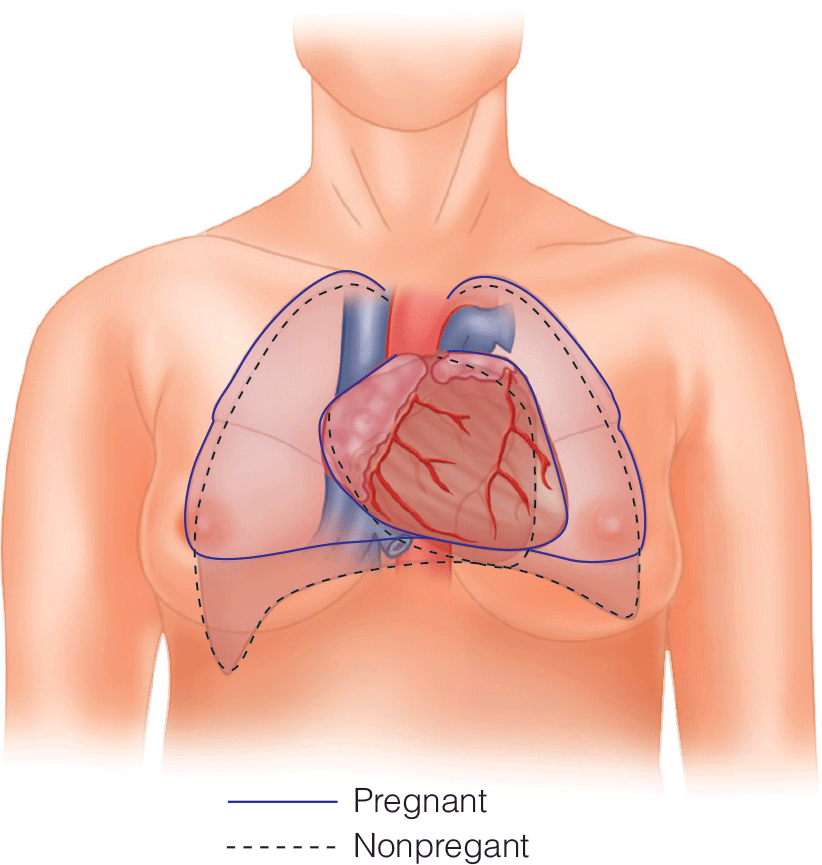
Cardiovascular Disease in Pregnancy
- The care of cardiac patients in pregnancy requires a multidisciplinary team approach with obstetricians skilled in the care of high-risk patients, cardiologists, anesthesiologists, intensivists, and genetic counselors when applicable. Delivery should be in a level III or level IV facility. There should be a detailed plan outlining delivery timing, fluid management, anesthesia planning, and the need for telemetry and invasive cardiac monitoring.
- Risk assessment using the WHO classification, CARPREG risk score, or ZAHARA risk score system should be completed at the preconception or initial prenatal visit.
- Most patients with cardiovascular disease can safely undergo vaginal delivery. The few instances when cesarean delivery should be considered include: Marfan syndrome with an aortic diameter greater than 40 to 45 mm, acute or chronic aortic dissection, and acute intractable heart failure.
- Endocarditis prophylaxis is no longer recommended for pregnant patients with cardiovascular disease in labor due to the extremely low incidence.












.png)